Tuesday, April 13, 2010

Canterbury, Pomfret and Woodstock vernal pool surveys - volunteer opportunity

Paula Coughlin at the Connecticut Audubon Society Grassland Center at Pomfret coordinates local citizen science projects and is gearing up to continue vernal pool surveys during the spring 2010 vernal pool season. Once again, Paula will be documenting vernal pools in Canterbury and Pomfret. Grace Jacobson of the Woodstock Conservation Commission will serve as the volunteer coordinator for Woodstock. Field work will be on Friday and Saturday mornings, 9-noon. Field site locations and relevant information will be emailed to volunteers early in the week so that you can check your calendar and see if you plan to attend. Anyone is welcome to help out whenever it works for you, in any of the three towns. Please contact Paula to sign up: (860) 928-4948 (work) or (860) 974-0383 (home), or via email: pcoughlin@ctaudubon.org.

Upcoming surveys are planned for Friday, April 16, 9-noon, location to be announced, and Saturday, April 17, Hanover Road (on Scotland line) meet at Canterbury Public Library at 8:45.


Paula Coughlin
Citizen Science Coordinator
Connecticut Audubon Society Grassland Center at Pomfret


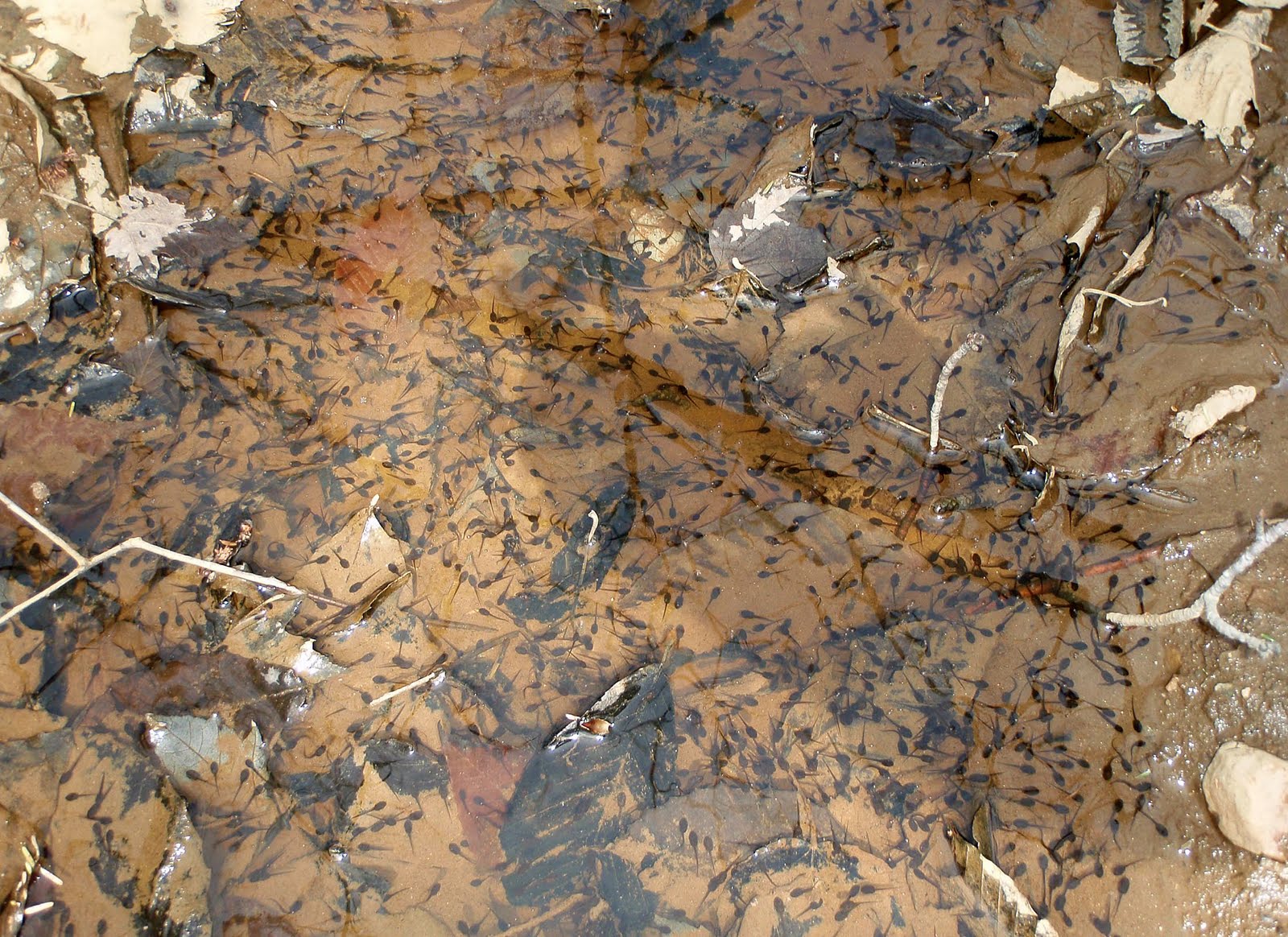
Photo: Wood Frog tadpoles in vernal pool © Twan Leenders

Spring has arrived at the CAS Croft Preserve in Goshen.

One of the largest and least developed sanctuaries owned and managed by Connecticut Audubon Society is the 700 acre Richard G. Croft Memorial Preserve in Goshen, in the rugged northwest hills. The preserve contains a fantastic mix of mature forest, large wetlands, bogs and beaver ponds and is home to an impressive array of wildlife. Limited survey work has revealed the presence of nesting Northern Goshawk, Winter Wren, and Hooded Merganser. Ruffed Grouse are present in seemingly decent numbers still and rarities such as Cerulean and Connecticut Warblers have been seen here as well. Because of the large territory available, Black Bear are common in the preserve and there appears to be a small population of Moose present also.
On April 12, I spent the day at the sanctuary to survey the preserve's important landscape elements to produce GIS maps for the sanctuary, carry out point counts as part of our continued monitoring efforts, and also to evaluate habitat management work we carried out in the winter. Part of the site survey was done in conjunction with representatives from the Natural Resource Conservation Service (NRCS) of the USDA. CAS works closely with the NRCS as part of the Federal Wildlife Habitat Incentive Program (WHIP), which provides funding for wildlife habitat improvement projects. One of the ongoing projects at the Croft Preserve is the creation and maintenance of several early successional habitat areas -- clearings with dense scrub vegetation that require periodic maintenance to keep them from reverting to forest.
In December of 2009 we worked with a group of high school students from the Forman School in Litchfield to remove small trees and tree saplings from one of our habitat management areas, covering almost 7 acres (see pictures below). All work in the area was done without the use of tractors or ATVs and all trees were cut by hand to avoid compacting the soil in the area and to minimize the risk of spreading invasive plant species by equipment that moves between sites.

Trees were dropped on the spot and large brush piles were created to provide additional wildlife habitat. The habitat work seems to be paying off already because my surveys yesterday revealed no fewer than 4 different Winter Wrens singing on territory in the newly opened area (and several more were heard elsewhere in the preserve). The moose seem to have survived the winter just fine and fresh tracks were seen all over the preserve.

We currently have motion-activated cameras installed to see if we can catch a glimpse of these animals. Pictures will be posted here as soon as we do!

One of the site's wetlands, a 17 acre wooded pond, already had several female Hooded Merganser present and hopefully they will breed here again. Last year I counted at least 23 young in addition to many young Wood Duck. This large wetland continuously changes shape due to the activity of beavers in the area.


Old beaver meadows can be found in various parts of the preserve, but recently a newly constructed beaver dam caused a 4+ acre section of the forest to flood. The changes in the habitat that this action causes will provide a great opportunity for study in years to come!
Most of the vernal wetlands on site now hold numerous egg masses of Wood Frogs and Spotted Salamanders, while the calls of Spring Peepers can be heard anywhere and Red-spotted Newts carry out their elaborate courtship displays in all permanent bodies of water. A nice surprise during the wetland surveys was the discovery of a substantial number of Jefferson's Salamander egg masses in several locations throughout the preserve -- this is a rare species included as a Special Concern species in the CT Endangered Species Act. Clearly the Croft Preserve provides suitable habitat for all kinds of rare species!


A quick survey of our most recently created early succesional habitat area (an almost 20-acre clearing opened up in the fall of 2008) showed that young growth is starting to come in nicely with no sign of invasive plants yet (keeping my fingers crossed). Troutlily (Erythronium americanum), Carolina Spring Beauty (Claytonia caroliniana) and the first Purple Trilliums (Trilium erectum) are alread adding a splash of color to the landscape.


Even though the big new clearing still resembles a bombing range with its trees dropped in place and only a few remaining canopy trees, soon this area too will be providing critical habitat for Ruffed Grouse and other scrub species. Our ongoing monitoring efforts are put in place to periodically assess the impact our habitat management efforts have on the local birds and other wildlife, so we can fine-tune our future management practices and hopefully provide even more and better habitat for our state's threatened and endangered species. We will keep you posted on how things develop!
For more information on the Croft Preserve or any of the other Connecticut Audubon Society sanctuaries, visit the sanctuary section of our website. We are hoping to update it soon with additional photographs, trail maps and species lists. Please keep in mind that the Croft Preserve does not have much of an infrastructure yet and the trail is very muddy and steep in places and can be challenging to navigate.
All photographs © Twan Leenders

Monday, April 12, 2010

Milford Point

You may have read about the Osprey cam (located here) in the entry below (this post), but that is just one of the many features of the CAS Coastal Center. Some of the programs coming up in the the next month include:

  • Birding 202 (4 evenings & field trip) Wednesdays, 7:15-9:15 p.m. on April 7, 21, 28, May 5, and Sat., May 1, 8:30-11:30 a.m. (field trip).
    Sharpen your ID skills before the spring rush! Explore bird identification by sight and sound in this expanded 202-level series. Four nights allow time for in-depth exploration; the fourth evening will focus on bird song identification. Learn to identify birds on your own and gain valuable time in the field with an experienced leader and fellow birders. Please register before April 7. Fee: $135 CAS Members, $165 Non-members.

  • Avian Art Show in Milford: On Display April 15-May 13 at Firehouse Gallery, and May 15-June 15 at Coastal Center (winners only).

    The Coastal Center and The Firehouse Gallery have teamed up to showcase the wonderful bird art of area artists. Starting April 15, all entries on display at Firehouse Gallery, 81 Naugatuck Ave.; starting May 15, winners only on display at Coastal Center. For more info call 203-306-0016. Free admission; proceeds from artwork sales will benefit both organizations.

  • Birding by Ear II, Saturday, May 8, 8:30-11:30 a.m.

    Is that an oriole or a tanager singing, a Hermit Thrush calling or a Catbird? Come find out as we delve further into the art of birding by ear. After reviewing the basics, we’ll practice with similar-sounding groups before heading into the field to hone our skills. Fee: $60 CAS Members, $80 Non-members.
The CAS Coastal Center is located at 1 Milford Point Rd., Milford. We can be reached at 203-878-7440. Please stop by if you have never visited us at the Coastal Center at Milford Point. Below is the view from the observation tower in the summer of 2009.


Yes, that is the very same Osprey platform in the middle of the photo! You can only imagine the wonderful variety of birds that can be found in the extensive marsh year-round. Please come by to see us soon.


Photo by Scott Kruitbosch.

Saturday, April 10, 2010

Calling all volunteers!

Volunteers are needed for plover and tern monitoring at Long Beach in Stratford and at Sandy Point in West Haven. This project is in addition to the regular, annual DEP/USFWS plover monitoring program. This project at two of Connecticut's IBAs is being coordinated through the Connecticut Ornithological Association which would like to find volunteers to visit the beaches at least weekly and monitor bird activity as well as human use and disturbance issues and the presence of dogs, cats or other disturbance/predation threats to these state and federally listed birds. Please contact Milan Bull at the Connecticut Audubon Society if you would like additional details or are interested in participating: mbull@ctaudubon.org (203) 259-6305, ext. 111


The above photo is of a Least Tern nest on Long Beach from June 9, 2009. Unfortunately, there were no successful nests in Stratford last summer primarily because of extreme rainfall causing exceptional tides that washed them away. Human traffic, loose dogs, and all-terrain vehicles driving in and around nesting areas also negatively impacted some of the nests and birds. Please consider volunteering to help monitor conditions at these beaches this summer.

Photo by Scott Kruitbosch.

Friday, April 9, 2010

Stratford Point this week

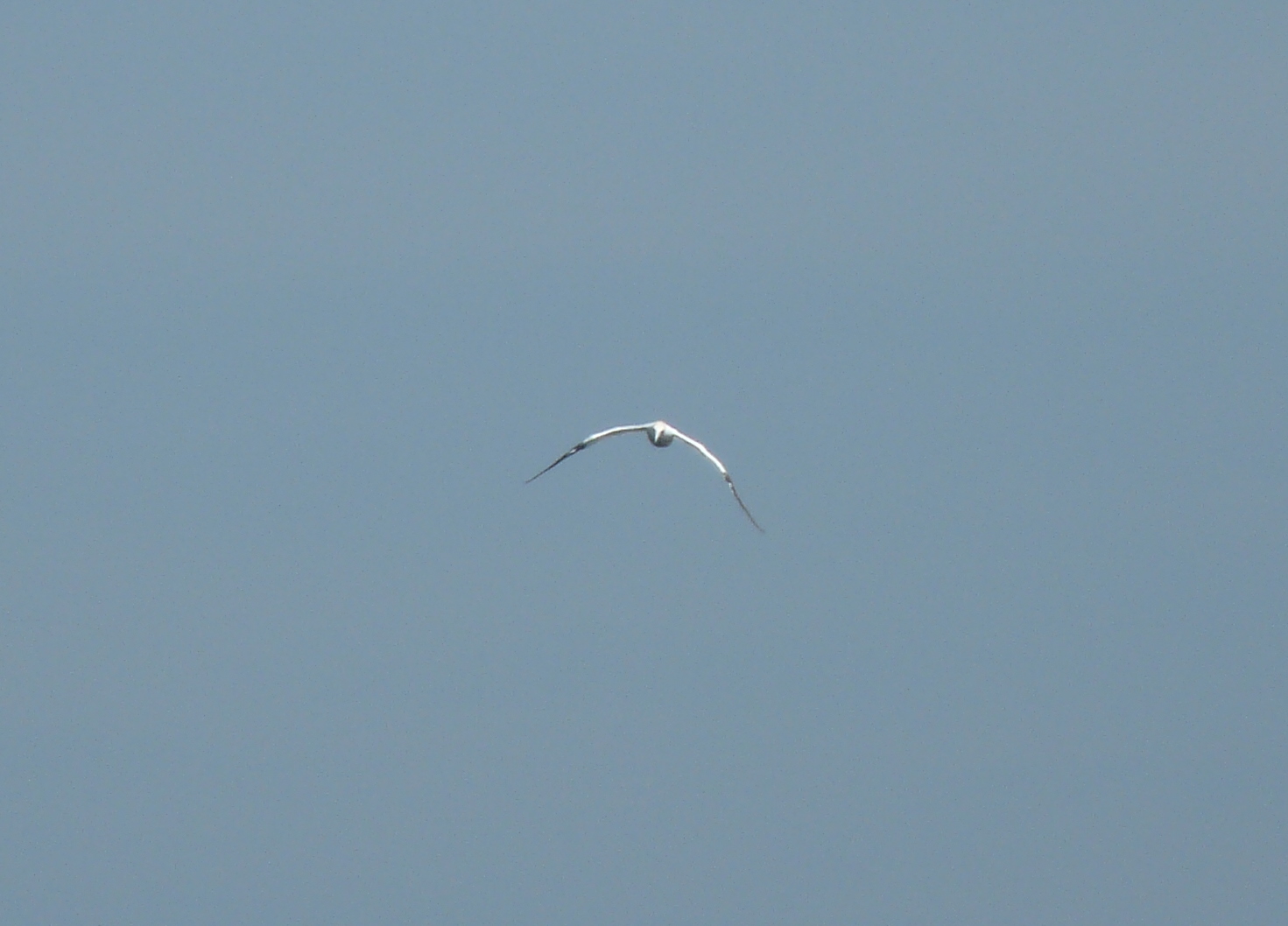
At least once a week we will try to show you what is going on at Stratford Point. Each season has its own distinctive set of birds given the site's location. There is never a quiet part of the year. As the ducks depart and passerine migrants move in there have been a lot of changes in species counts in the last few weeks. You may have already seen the picture of the Merlin that visited us for most of the week in the blog entry from April 5. It seems to have left, but the middle of the week found anywhere from 30 to 60 Northern Gannet feeding offshore in Long Island Sound. Most of these birds were so far out they could only be seen using binoculars or a spotting scope. Occasionally one will make a pass closer to shore. A couple of bad pictures were snapped of one of those birds:


During the somewhat dreary and quiet day today, we had a pair of American Oystercatcher foraging and resting along the shoreline. The species has been spotted flying by a few times in the last week. Our "Connecticut State of the Birds 2008" Report, which can be read here, featured the American Oystercatcher as one of six species with plummeting populations for which Connecticut habitat is vital to its global survival. It is a state-listed "species of Special Concern". The pair posed for a quick picture:


Photographs by Scott Kruitbosch.

Tuesday, April 6, 2010

Osprey up close and personal at CAS Coastal Center in Milford and in your home!


For several years, the Connecticut Audubon Society Coastal Center at Milford Point has had a webcam trained on one of the Osprey nesting platforms in the Wheeler Marsh, right in front of the center's spectacular viewing window. Unknown technical problems caused the camera to short out through much of last year's breeding season and it was only then that we realized exactly how many people follow the everyday lives of "our" Osprey and their chicks: calls and emails arrived literally from all over the planet asking when the camera would be operational again.

On March 24, CAS senior director of Science and Conservation, Milan Bull, and CAS conservation biologist Twan Leenders donned waders and braved freezing cold water and 35mph sustained winds to find out if the camera was fixable.

An inspection of the wiring revealed that one of the splices near the nest platform had leaked and caused a short. We also discovered that the female Osprey was already back in the marsh and while we were working near the nest two more Osprey returned from their wintering grounds, including the male of the resident pair. He did not waste any time and was soon spotted carrying a prize rainbow trout to impress the female. We knew that time was of the essence since we did not want to disturb the birds with our presence. The camera was removed from the nest for a quick check-up and it was decided that a whole new cable was needed for the video feed. We decided to leave our ladder at the base of the platform and return the next day....

...which was when a big rain storm hit and compeletely flooded the marsh (and our ladder) for several days!

The weather conditions for the subsequent days were simply not conducive to go back out to the nest and with every passing day our window to get the camera in place was getting smaller. The new cable and camera had to be installed before the Osprey laid their first egg.
Everything was hooked up and tested indoors, waiting for a break in the weather.

On April 1 that break came and Frank Gallo, director of the CAS Coastal Center, and Twan Leenders slogged out through more than knee-deep saltmarsh mud with a canoe full of equipment to lay out 1000 feet of new video cable to the nest platform and to install the camera.
Note that the Osprey pair has become quite territorial at this point and the birds are never far from their nest, carefully eying our every move...

Luckily the operation was a success and the video feed was restored to the monitor in the Coastal Center that day. By now (April 6) background information on the status of "our" Osprey and a live feed of the pair's antics can be found at this link. Just in time, because around 6AM this morning the first egg was laid! Hopefully you will now be able to enjoy the daily life of the Osprey family as much as we do, from the comfort of your home. Or, come pay them a visit at the CAS Coastal Center at Milford Point - it is well worth it!
Osprey photograph by Twan Leenders, additional photographs by Frank Gallo and Twan Leenders

Monday, April 5, 2010

Stratford Point

Have you been to visit us at Stratford Point? The Connecticut Audubon Society conducts waterfowl surveys for DuPont, the owners of the site, on a daily basis. When the gate is open, usually during typical business hours Monday through Friday, we encourage you to stop by. Visitors are welcome to hike the designated areas 28-acre site, do some birding, biking, fishing, take their dog for a stroll, and enjoy the beautiful views on this wonderful property. The site's location makes it ideal for many species of duck, loon, grebe, and shorebird. The grasslands in the upland area invite a variety of passerines and raptors, from some typical backyard species to tough-to-find sparrows and various owls. A large number of rare birds have been seen at Stratford Point during our time monitoring the site.

This past weekend brought several new faces to Stratford Point for the year. A stunningly cooperative and tame Pine Warbler was on Saturday. It took a liking to the small pines surrounding the driveway to the facilities. The bird probably decided to stop and refuel at the first piece of land it saw with some type of pine trees after a very long journey. It continually foraged with a Golden-crowned Kinglet. The Pine Warbler was gone on Sunday, likely continuing it's march to lands to our north. This weekend also yielded two Brown Thrashers, a rare scrub species that is one of Connecticut Audubon Society's Top 20 "Conservation Priority" Bird Species. They were quite conspicuous and vocal, hopping along the fences on the edges of the property. Also notable were three Hermit Thrush, a common woodland species that can overwinter in Connecticut in certain areas. After being surprisingly absent from much of Fairfield County this fall these migrant birds represent one of the first signs of the main brunt of spring migration. Today did not feature any new passerine migrants, but there was a Merlin hanging around in our trees looking for a snack. The birds should keep moving in moderate to high volume all week long because of the warm southerly flow we're currently all enjoying. Please stop by to visit them - and us!


Photos by Scott Kruitbosch