The White-tailed Kite is still at Stratford Point for day 45, showing no immediate signs of departure. However, Tuesday night lead to some more craziness there, and another possible mega east coast rarity - this time from Europe. Unfortunately, the possible White Wagtail was not rediscovered today. I was not there for this one, arriving after the only sighting of it. An all-star lineup of birding experts, some with experience with the species, could not relocate it even later that evening at Stratford Point, Short Beach, Long Beach, or anywhere in between. The following is a quick summary of the possible White Wagtail sighting put together late last night by Coastal Center Director Frank Gallo along with Conservation Biologist, and the other author of this blog, Dr. Twan Leenders - they saw it!
Twan Leenders, Paul Fusco, and I were standing at Stratford Point near the buildings waiting for the Kite to return, when we heard an odd double-note chup, chup, or chip, chip, sort of raspy but loud call coming from behind us. It was not the sound of any North American bird that I recognized, and we turned to look as a slight larger than pipit-sized bird came over the building (it came in off the Long Island Sound) flying rather pipit-like but with longer intervals between dips, and flew right over our heads above the trees. In silhouette, it was fairly slim with a long square-tipped tail that was white below. The bird looked dark gray and white in flight and when it turned it had a dark body and black and white on the head. My impression was the black was on the crown and behind the eye and possibly on the throat. Twan saw black and white on the head, as well. One of the most striking and obvious things about the bird was the long undulating roller coaster flight pattern which both Twan and I noted. Our impression was that it flew and sounded like some form of White Wagtail. Several subspecies of White Wagtail occur throughout Europe, North Africa and SE Asia. I have seen and heard White Wagtails during my travels in Europe and Twan, being from The Netherlands, is quite familiar with this species as it is a common summer resident where he has lived much of his life.
After it flew over our heads, the bird dived into the grass near the entrance to Stratford Point, but we were unable to relocate it. While searching the neighborhood adjacent to the facility we found a white budgie with a flock of starlings. This bird showed a tapered white tail and flew fast and straight without undulating in flight and looked very bright white, although photos showed it to have some pale gray bars on the back and face. It was later relocated by Frank Mantlik on nearby Short Beach. After looking through videos of both white wagtails and budgies, and listening to many recording of both, we could find none showing a budgie undulating in flight - they fly fast and straight with wings below the horizontal, nor do they make a regular & repeated chip chip, and we found several recordings of white wagtail that matched the call we heard. Wagtails are a bird that enjoys half-open country, lawns, beaches and other open areas where it hunts for insects. We feel it's worth checking the dunes, rocky beaches, lawns and fields in area, including Short and Long Beach, Sikorsky airport and the around Stratford Point. Let's hope we can re-find it and get a photo. Look for a boldly marked black-and-white bird that constantly wags its tail as it chases insects (hence its common name), and look for its distinctive undulating flight. I haven't had a chance to check, but there are at least a couple of eastern records, including one, I believe, from Virginia.
This is a tough one, and quite frustrating for everyone involved. I, for one, am certain that Frank and Twan, experts who have a great deal of experience with the conspicuous species, were right in their ID. Everything they said to me while we frantically searched for it last night sounded perfect in terms of careful, considerate, thoughtful, and objective identification. Apart from that, this is the time of year that White Wagtails migrate in Europe. From what I have read they are long-distance diurnal migrants. It is probably the best window of time for one to come to North America. Additionally, we had a stiff easterly wind on Sunday and Monday.
With so many people busy at work on a Tuesday there were not too many eyes in the field today. Even Twan and Frank were occupied with other CAS work. There is definitely still a chance to find it again. Please come out and take a look everywhere in the area in and around Stratford Point. I hope that it will turn up somewhere nearby soon, perhaps after resting and staying out of sight more than usual because of a highly stressful and taxing journey across the Atlantic Ocean. If it is found once again you can be sure any photos will be right here. Keep your fingers crossed!

Tuesday, September 14, 2010


Sunday, September 12, 2010
White-tailed Kite FAQ #2

I did a FAQ blog entry about the White-tailed Kite and Stratford Point over a month ago. Since things have changed a bit in that time I thought it might be a good idea to do version 2, which is below. Thanks to our friend Kevin Doyle for all the great photos!
1) Where should I go to see the White-tailed Kite?
Stratford Point is the place to go in the early morning or evening, when it is likely to be hunting. The next best choice would be mid to late morning or late afternoon at Stratford Point where, because fewer people stop by to see it, the kite may be roosting or relaxing, or even hunting as it eats more than it used to. This may be because it is colder and the raptor requires more calories in the cooler weather, or because it is preparing to take a journey back south or west. Otherwise, it is occasionally at Short Beach in Stratford or very far down the beach at Milford Point (this is often viewable from the Coastal Center tower).
2) So what and where is Stratford Point?
Stratford Point is what we call the 28-acre coastal grasslands management area that is managed by the Connecticut Audubon Society and owned by Sporting Goods Properties, a subsidiary of DuPont. It is located at 1207 Prospect Drive in Stratford, Connecticut. You cannot miss it on a map or if you come to that address in person. It is a very spectacular and unique property situated on the mouth of the Housatonic River and Long Island Sound. It is open to many forms of passive recreation, including all birding, when the gate is open and we are here.
3) So when does the gate at Stratford Point open?
There is no set time or schedule, though it is usually open during business hours on weekdays. This is approximately 8 or 9AM until around 4 or 5PM, sometimes a bit earlier or later. This is not a guarantee. Sometimes it is not open at all. It is also not open on the weekend. Despite the beautiful property and buildings, please remember that Stratford Point is not a) owned by the Connecticut Audubon Society or b) one of our centers. It is a piece of private land with some buildings that are used for offices.
When the gate is closed you are welcome to watch the White-tailed Kite from outside of Stratford Point property on Prospect Drive, or down on the beach, but please do not venture onto the site when it is not open. It is private property and a coastal grasslands management area. The birds, including the kite, benefit greatly from everyone respecting this.
4) Why was the gate open before and not now?
As said, it is open during the time described above. Otherwise, the only reason it was open was that I took the time to go there, open it, and stay at the site, or return in the evening to close it. I can no longer maintain that schedule. Unfortunately, life must go on, and the kite cannot be the center of attention. I wish it could, believe me. Doing nothing all day but watching the birds at Stratford Point was a highly enjoyable time.

5) OK, but where do I go once I'm there?
If the gate is open drive up very slowly, watching for people, birds, and the kite. Proceed to the visitor parking area by the second building. If you do not see the kite hovering or flying around over the grasslands anywhere, check the third tree from the beach behind the second building. Then scan every tree there. Be sure to keep a distance while looking or you will flush it off or scare it away to Short Beach. It is a very uneasy raptor, and does not tolerate close approaches by people on foot or any vehicle. Always talk to any visitors there as they likely have experience with the kite, or CAS staff if they are outside and not in the offices. If none of this works, give it some time. The kite may be at Short Beach or Milford Point.
6) I missed the kite before and I can't find it now, what do I do?!
Do just what I said. As with every chase, nothing is guaranteed. I am very sorry you missed it before and are having trouble, but it seems like you had some bad luck and nothing more. If you go to Stratford Point on any given day early or late for a substantial period you have a high (over 90%) chance of seeing it. Coming to see the White-tailed Kite is as easy as it gets for mega rarities, but that does not mean it is without a chance of failure. Perhaps a Peregrine chased it away around sunrise. Maybe the afternoon or evening hunt is fast, for 10 minutes and nothing more. Things happen, but the vast majority of people have success with it.
7) I thought you said the kite was leaving, right?
It was...probably. A few of the regular visitors and me noted how much more it was feeding in late August. Instead of one kill in the evening, it would grab two, three, or four rodents. I also watched it take a tremendously high flight thousands of feet into the air, then start heading southwest, only to stop and return back to Stratford Point. This test flight was in the middle of a lot of feeding, and near what we thought was the end of a molt. Not long after the tail went through a molt, and feeding returned to normal levels. In the past week, it has once again been feeding much more, though I suspect it could be because temperatures are rather cold for the species. This is in relative terms. If it was living in south Texas or south Florida then it is used to warmer days than, say, a high of 65 and a low of 52. Perhaps one of the upcoming cold fronts will push it south. My original prediction was that a strong and cold September front in the middle of the month would push it out. We are just about there now.
As always, if you enjoyed a trip to see the White-tailed Kite, please consider donating to the Connecticut Audubon Society. It makes all of this possible. Please consider joining us as a member here too. Thank you!

All photos © Kevin Doyle
Friday, September 10, 2010
More fall events
Here are some more upcoming fall events are three more Connecticut Audubon Society centers. Please take a look to see if you or anyone you know, especially children, may be interested.
At our Glastonbury Center...
(1361 Main Street, Glastonbury, 860-633-8402)
"Pee Wees" programs on Tuesdays, 10-11 a.m. are for 1-3 year olds with an adult, beginning with "Bugs, Slugs, Worms and Life Under a Log!" on Sept. 21, 28, Oct. 5, 12; "Native American Customs" on Nov. 2, 9, 16, 23; and "Winter Gift" on Dec. 7. Please pre-register. Fee: $10 CAS members (or a series discount), $13 Non-Members.
"Wees" programs on Mondays, 1-2 p.m. are for 3-5 year olds, beginning with "Bugs, Slugs, Worms and Life Under a Log!" on Sept. 20, 27, Oct. 4, 18; "Things That Go Bump in the Night!" Oct. 25; "Native American Customs" Nov. 1, 8, 15, 22; and "Winter Gift" on Dec. 6. Please pre-register. Fee: $10 CAS members (or a series discount), $13 Non-Members.
Our "Fall Discoverer Series" is for 5-9 year olds. If YOU were an animal, how would you prepare for fall and winter? And how do we mammals handle seasonal change? Each week we'll decide whether to migrate, hibernate or stick around. Tuesdays, 4-5 p.m. on Sept. 14, "Frogs, Toads, Turtles"; Sept. 21, "Backyard Birds & Bugs,"; Sept. 28, "Squirrels & Chipmunks,"; Oct. 5, "Coyotes & Foxes"; and Oct. 12, "Bats!." Please pre-register. Fee: $10 CAS Members (or a series discount), $13 non-members.
Landscaping for Wildlife on Sat., Sept. 18, 3-4 p.m. Find out which native plants and trees can be used in your yards, gardens and business landscaping to attract birds, butterflies and other wildlife. Our presenter is Robert Wirtanen, B.S. Wildlife Biology from Colorado State University, AA.S Natural Resource Technician, Central Lakes College, Level IVE Rocky Mountain Raptor Program. Fee: $20 pre-paid, light refreshments.
At our Pomfret Center...
(189 Pomfret St., Rte 169, Pomfret Center, 860-928-4948)
Saw-whet Owl Banding at 7 p.m. on Sat., Oct. 23, Sat., Oct. 30 and Fri., Nov. 5. It's our fourth year banding Northern Saw-whet Owls as they migrate south: don't miss it! (Our record year was 2007 when we banded 25 different Saw-whet Owls.) Pre-registration required; limit of 20 people per program. Bring your cameras! Program fee: $15 CAS Members, $25 Non-members.
Trails For Toddlers, Tuesdays, 9:30-10:30 a.m. on Sept. 28, Oct. 5, 12, 19, 26, Nov. 2. For children 6 months to 3 years old accompanied by an actively participating adult. We begin with a "Circle Time" of songs, poems and books followed by a short walk on one of Bafflin Sanctuary's trails. Program fee (1 child & 1 adult): $5 CAS Members, $7 Non-members. 6-program series: $25 CAS Members, $35 Non-members.
Bird's-Eye View: Tethered Balloon Rides! Mon., Oct. 11, 4-6 p.m. Have you ever wanted to ride in a a hot air balloon? This is your chance. Head up over the corn maze at Fort Hill Farms in Thompson (Exit 99 off Route 395). Proceeds benefit our Center at Pomfret. Call 860-923-3439 for information and conditions. Fee: $10 per person per ride.
At our Trail Wood Sanctuary...
(93 Kenyon Road, Hampton, 860-928-4948)
After School Nature Club for Grades 2-5 on Wednesdays, Sept. 15, 22, 29, Oct 6, 13, 20, 3:30-5:15 p.m. If you child needs to blow off steam after school, send them to Trail Wood. We'll fill their afternoons with fresh air and hikes on our 168-acre sanctuary and some lessons on wildlife. 6-program series: $50 CAS Members, $60 Non-members.
Guided Tours of Edwin Way Teale's Trail Wood on Sat., Oct. 9, 10 a.m. & 2 p.m. and Sun., Oct. 10, 10 a.m. & 2 p.m. Bring family and friends and join us for a leisurely, two-hour walk along the trails that Edwin Way Teale and his wife Nellie named at their former home. Learn how Monument Hill got its name, why the Old Colonial Road is a part of Connecticut's history, what the writing cabin was for and how and why the Teales named the places they traversed almost daily on their 168-acre homestead. Meet in the Visitor's Parking Lot at 93 Kenyon Road in Hampton. Recommended for those 8 years & older (children must be with an adult) who are accustomed to hiking two or more miles. Free although donations are always appreciated.
At our Glastonbury Center...
(1361 Main Street, Glastonbury, 860-633-8402)
"Pee Wees" programs on Tuesdays, 10-11 a.m. are for 1-3 year olds with an adult, beginning with "Bugs, Slugs, Worms and Life Under a Log!" on Sept. 21, 28, Oct. 5, 12; "Native American Customs" on Nov. 2, 9, 16, 23; and "Winter Gift" on Dec. 7. Please pre-register. Fee: $10 CAS members (or a series discount), $13 Non-Members.
"Wees" programs on Mondays, 1-2 p.m. are for 3-5 year olds, beginning with "Bugs, Slugs, Worms and Life Under a Log!" on Sept. 20, 27, Oct. 4, 18; "Things That Go Bump in the Night!" Oct. 25; "Native American Customs" Nov. 1, 8, 15, 22; and "Winter Gift" on Dec. 6. Please pre-register. Fee: $10 CAS members (or a series discount), $13 Non-Members.
Our "Fall Discoverer Series" is for 5-9 year olds. If YOU were an animal, how would you prepare for fall and winter? And how do we mammals handle seasonal change? Each week we'll decide whether to migrate, hibernate or stick around. Tuesdays, 4-5 p.m. on Sept. 14, "Frogs, Toads, Turtles"; Sept. 21, "Backyard Birds & Bugs,"; Sept. 28, "Squirrels & Chipmunks,"; Oct. 5, "Coyotes & Foxes"; and Oct. 12, "Bats!." Please pre-register. Fee: $10 CAS Members (or a series discount), $13 non-members.
Landscaping for Wildlife on Sat., Sept. 18, 3-4 p.m. Find out which native plants and trees can be used in your yards, gardens and business landscaping to attract birds, butterflies and other wildlife. Our presenter is Robert Wirtanen, B.S. Wildlife Biology from Colorado State University, AA.S Natural Resource Technician, Central Lakes College, Level IVE Rocky Mountain Raptor Program. Fee: $20 pre-paid, light refreshments.
At our Pomfret Center...
(189 Pomfret St., Rte 169, Pomfret Center, 860-928-4948)
Saw-whet Owl Banding at 7 p.m. on Sat., Oct. 23, Sat., Oct. 30 and Fri., Nov. 5. It's our fourth year banding Northern Saw-whet Owls as they migrate south: don't miss it! (Our record year was 2007 when we banded 25 different Saw-whet Owls.) Pre-registration required; limit of 20 people per program. Bring your cameras! Program fee: $15 CAS Members, $25 Non-members.
Trails For Toddlers, Tuesdays, 9:30-10:30 a.m. on Sept. 28, Oct. 5, 12, 19, 26, Nov. 2. For children 6 months to 3 years old accompanied by an actively participating adult. We begin with a "Circle Time" of songs, poems and books followed by a short walk on one of Bafflin Sanctuary's trails. Program fee (1 child & 1 adult): $5 CAS Members, $7 Non-members. 6-program series: $25 CAS Members, $35 Non-members.
Bird's-Eye View: Tethered Balloon Rides! Mon., Oct. 11, 4-6 p.m. Have you ever wanted to ride in a a hot air balloon? This is your chance. Head up over the corn maze at Fort Hill Farms in Thompson (Exit 99 off Route 395). Proceeds benefit our Center at Pomfret. Call 860-923-3439 for information and conditions. Fee: $10 per person per ride.
At our Trail Wood Sanctuary...
(93 Kenyon Road, Hampton, 860-928-4948)
After School Nature Club for Grades 2-5 on Wednesdays, Sept. 15, 22, 29, Oct 6, 13, 20, 3:30-5:15 p.m. If you child needs to blow off steam after school, send them to Trail Wood. We'll fill their afternoons with fresh air and hikes on our 168-acre sanctuary and some lessons on wildlife. 6-program series: $50 CAS Members, $60 Non-members.
Guided Tours of Edwin Way Teale's Trail Wood on Sat., Oct. 9, 10 a.m. & 2 p.m. and Sun., Oct. 10, 10 a.m. & 2 p.m. Bring family and friends and join us for a leisurely, two-hour walk along the trails that Edwin Way Teale and his wife Nellie named at their former home. Learn how Monument Hill got its name, why the Old Colonial Road is a part of Connecticut's history, what the writing cabin was for and how and why the Teales named the places they traversed almost daily on their 168-acre homestead. Meet in the Visitor's Parking Lot at 93 Kenyon Road in Hampton. Recommended for those 8 years & older (children must be with an adult) who are accustomed to hiking two or more miles. Free although donations are always appreciated.
Tuesday, September 7, 2010
White-tailed Kite Day 38
I still wonder how high that day total is going to get. The White-tailed Kite is still at Stratford Point, and occasionally at Short Beach or the Coastal Center at Milford Point. I have not had a good look at it since Sunday night, though I suspect the tail molt still has a fair amount of time to go. We will indeed have a strong cold front passing through on Wednesday. Definitely get out there Thursday morning for southbound migrants! It should be a great morning. The front and ensuing northwest winds should then send you to the closest hawk watch site. It will undoubtedly be the best day yet this "fall" season. This is the perfect weather for the kite to depart in, but we suspect it will remain because of the ongoing molt. I feel like I have said that about 631 times in the past month plus, but it is still the case.
So here, as always, are several more contributed White-tailed Kite photos. The first three are from Kevin Doyle.


And these three photos are from Scott Vincent - thanks to both of them!


The last photo below, also from Scott Vincent, is of the first Northern Harrier at Stratford Point this "fall/winter" season.

It will obviously be fascinating to see how these two raptor species interact, especially because they are hunting the same prey - small mammals. Peregrine Falcons attack the White-tailed Kite on sight, while American Kestrels occasionally go after it, and Merlins largely leave it be. Ospreys, not sharing any prey with the kite whatsoever, only rarely interact with it. I imagine the kite will try to avoid any harriers, but we'll see what happens soon enough. Many Northern Harriers are seen at Stratford Point each year. Even after the kite departs...eventually...you should come visit to see these raptors up close.
Photos 1-3 © Kevin Doyle; photos 4-7 © Scott Vincent
So here, as always, are several more contributed White-tailed Kite photos. The first three are from Kevin Doyle.


And these three photos are from Scott Vincent - thanks to both of them!


The last photo below, also from Scott Vincent, is of the first Northern Harrier at Stratford Point this "fall/winter" season.

It will obviously be fascinating to see how these two raptor species interact, especially because they are hunting the same prey - small mammals. Peregrine Falcons attack the White-tailed Kite on sight, while American Kestrels occasionally go after it, and Merlins largely leave it be. Ospreys, not sharing any prey with the kite whatsoever, only rarely interact with it. I imagine the kite will try to avoid any harriers, but we'll see what happens soon enough. Many Northern Harriers are seen at Stratford Point each year. Even after the kite departs...eventually...you should come visit to see these raptors up close.
Photos 1-3 © Kevin Doyle; photos 4-7 © Scott Vincent
Sunday, September 5, 2010
White-tailed Kite video #5
The White-tailed Kite continued to be seen at Stratford and Milford Points this evening for day number 36. Below is the fifth video I have taken of the White-tailed Kite. It is footage assembled from the last week while hunting at Stratford Point, soaring and interacting with some other birds.
White-tailed Kite 5 from Connecticut Audubon Society.
I'm sure, as always, we will have some more amazing photos soon. A strong cold front should pass through our area Wednesday night. It is just the sort of front that should lead the kite back to its home. However, because of the ongoing tail molt, I do not believe it will leave us quite yet. If the molt takes a while and we continue to have above-normal temperatures (and a lack of cold fronts) we may be able to make a run at having it through October.
Video © Scott Kruitbosch
Saturday, September 4, 2010
Fall events
Here is a rundown of upcoming events at three Connecticut Audubon Society locations: the Birdcraft Museum and Sanctuary and the CAS Center in Fairfield, as well as the Coastal Center at Milford Point. You can find more details and contact information on each center's page, linked above.
First, Birdcraft...
Nature Nursery, Wednesdays, 10-10:45 a.m. on Oct. 13, 20, 27, Nov. 3, 10, 17. -- Ready, Set, Sleep! Who's staying up all winter, who's getting ready to sleep and who's going somewhere else? Discover how nature prepares for winter. For 2-3 year olds accompanied by an actively participating adult. Advance registration required. Program fee (1 child & 1 adult): $12 CAS Members, $16 Non-members. 6-program fee: $66 CAS Members, $90 Non-members.
Bird Banding Demonstrations, Wednesdays, Sept. 15, 22, 7:30-8:30 a.m. -- Our bird banding station's research shows that on average 120+ different species visit our 6-acre Birdcraft Sanctuary as a resting and refueling stop along their migratory route. Discover which birds are stopping over this fall. Advance registration required. Single program fee: $7/person (family max. $21) CAS members, $12/person (family max. $36) Non-members. In case of inclement weather, program is postponed to Thursday.
At the Fairfield center...
Nature Nursery, Mondays, 9:30-10:15 a.m. on Oct. 18, 25, Nov. 1, 8, 15, 22. -- Fall in the Forest" series is for 2-4 year olds accompanied by an adult, We'll explore the changes in our Larsen Wildlife Sanctuary during the fall. Each program includes an outdoor exploration, stories and craft. Advance registration required. Program fee (1 adult & 1 child): $12 CAS Members; $16 Non-members. 6-program series: $66 CAS Members; $90 Non-members.
Science Sleuths & Nature Nuts on Saturdays, 10:30 a.m.-noon on Oct. 16, 23, 30 and Nov. 6, 13, 20. -- Ornithology. Entomology. Ecology. Zoology. Join our teacher-naturalists for this great introduction to the different areas of scientific study. We'll explore Larsen Wildlife Sanctuary from the point of view of a different "-ologist" each week. For children in grades 3-5. Advance registration required. Program fee: $12 CAS Members, $16 Non-members. 6-program series: $66 CAS Members, $90 Non-members.
Family Campfire and Goodnight Walk on Fri., Sept. 24, 6:30--8 p.m. -- Join us for an evening around a campfire with stories and s'mores. We'll take a short walk to experience the sights and sounds of our Larsen Wildlife Sanctuary. Suitable for all ages. Advance registration required. Fee: $7/person (family max. $21) CAS members, $12/person (family max. $36) Non-members.
Finally, at Milford Point...
Guided Family Canoe Tours, Sat., Sept. 11, 12:30-3 p.m.; Sun., Sept. 12, 1:30-4 p.m.; or Sat., Sept. 25, 11:30 a.m.-2 p.m. -- Take one of our tours and explore the 840-acre Wheeler Salt Marsh. CAS naturalists will describe the area's long history and point out the Marsh's many bird species and other wildlife, while you enjoy the beautiful vistas and paddle and relax. Advance registration required. Fees using our canoes for CAS Members: $25/person, $65/canoe (up to 3 people). For Non-members: $35/person, $95/canoe. Fees using your own canoe or kayak: $19 CAS Members, $29 Non-members.
"Sea Squirts" programs on Thursdays, 10:30-11:30 a.m., are for 3-5 years olds accompanied by an adult. They begin Sept. 9 with "Hoot for Owls!"; Sept. 23, "Going Batty at the Beach!"; Oct. 7, "Falling Leaves"; Oct. 21, "Migrating Monarchs"; Nov. 4, "Wonderful Webs"; Nov. 18, "Traveling Seeds"; and Dec. 2, "Animals in Winter." Each features an outdoor discovery walk or live-animal presentation, stories, songs and crafts. Advance registration required. Single program fee (1 child & 1 adult): $10 CAS Members, $15 Non-members; add $5 for each additional child.
Charles Island Explorations on Wed., Sept. 8, 5 p.m.; Sun., Sept. 12, 8 a.m.; Thurs., Sept. 23, 5 p.m.; and Tues., Oct. 12, 8:30 a.m. Discover the natural history and folklore that make this special place the "treasure" of Milford. Advance registration only. Daily fee: $10/adult, $6/child CAS Members; $15/adult; $10/child Non-Members; $5/seniors.
First, Birdcraft...
Nature Nursery, Wednesdays, 10-10:45 a.m. on Oct. 13, 20, 27, Nov. 3, 10, 17. -- Ready, Set, Sleep! Who's staying up all winter, who's getting ready to sleep and who's going somewhere else? Discover how nature prepares for winter. For 2-3 year olds accompanied by an actively participating adult. Advance registration required. Program fee (1 child & 1 adult): $12 CAS Members, $16 Non-members. 6-program fee: $66 CAS Members, $90 Non-members.
Bird Banding Demonstrations, Wednesdays, Sept. 15, 22, 7:30-8:30 a.m. -- Our bird banding station's research shows that on average 120+ different species visit our 6-acre Birdcraft Sanctuary as a resting and refueling stop along their migratory route. Discover which birds are stopping over this fall. Advance registration required. Single program fee: $7/person (family max. $21) CAS members, $12/person (family max. $36) Non-members. In case of inclement weather, program is postponed to Thursday.
At the Fairfield center...
Nature Nursery, Mondays, 9:30-10:15 a.m. on Oct. 18, 25, Nov. 1, 8, 15, 22. -- Fall in the Forest" series is for 2-4 year olds accompanied by an adult, We'll explore the changes in our Larsen Wildlife Sanctuary during the fall. Each program includes an outdoor exploration, stories and craft. Advance registration required. Program fee (1 adult & 1 child): $12 CAS Members; $16 Non-members. 6-program series: $66 CAS Members; $90 Non-members.
Science Sleuths & Nature Nuts on Saturdays, 10:30 a.m.-noon on Oct. 16, 23, 30 and Nov. 6, 13, 20. -- Ornithology. Entomology. Ecology. Zoology. Join our teacher-naturalists for this great introduction to the different areas of scientific study. We'll explore Larsen Wildlife Sanctuary from the point of view of a different "-ologist" each week. For children in grades 3-5. Advance registration required. Program fee: $12 CAS Members, $16 Non-members. 6-program series: $66 CAS Members, $90 Non-members.
Family Campfire and Goodnight Walk on Fri., Sept. 24, 6:30--8 p.m. -- Join us for an evening around a campfire with stories and s'mores. We'll take a short walk to experience the sights and sounds of our Larsen Wildlife Sanctuary. Suitable for all ages. Advance registration required. Fee: $7/person (family max. $21) CAS members, $12/person (family max. $36) Non-members.
Finally, at Milford Point...
Guided Family Canoe Tours, Sat., Sept. 11, 12:30-3 p.m.; Sun., Sept. 12, 1:30-4 p.m.; or Sat., Sept. 25, 11:30 a.m.-2 p.m. -- Take one of our tours and explore the 840-acre Wheeler Salt Marsh. CAS naturalists will describe the area's long history and point out the Marsh's many bird species and other wildlife, while you enjoy the beautiful vistas and paddle and relax. Advance registration required. Fees using our canoes for CAS Members: $25/person, $65/canoe (up to 3 people). For Non-members: $35/person, $95/canoe. Fees using your own canoe or kayak: $19 CAS Members, $29 Non-members.
"Sea Squirts" programs on Thursdays, 10:30-11:30 a.m., are for 3-5 years olds accompanied by an adult. They begin Sept. 9 with "Hoot for Owls!"; Sept. 23, "Going Batty at the Beach!"; Oct. 7, "Falling Leaves"; Oct. 21, "Migrating Monarchs"; Nov. 4, "Wonderful Webs"; Nov. 18, "Traveling Seeds"; and Dec. 2, "Animals in Winter." Each features an outdoor discovery walk or live-animal presentation, stories, songs and crafts. Advance registration required. Single program fee (1 child & 1 adult): $10 CAS Members, $15 Non-members; add $5 for each additional child.
Charles Island Explorations on Wed., Sept. 8, 5 p.m.; Sun., Sept. 12, 8 a.m.; Thurs., Sept. 23, 5 p.m.; and Tues., Oct. 12, 8:30 a.m. Discover the natural history and folklore that make this special place the "treasure" of Milford. Advance registration only. Daily fee: $10/adult, $6/child CAS Members; $15/adult; $10/child Non-Members; $5/seniors.
Thursday, September 2, 2010
White-tailed Kite month #2 and early Earl pics
The White-tailed Kite has entered its second month at Stratford Point. It is beyond amazing. I do not know of anyone that thought this length of a stay probable or even considered it a possibility. Some people thought it would depart instantly, while others pointed to the molt and said it would have to stay for some time...as long as it ate well. Yet here we are. It does need to replace some tail feathers, as you can see in the great photos below, so perhaps that will keep it around some more.


Thanks to Paul Fusco and Scott Vincent for those pictures. The past week was very tough, with record-setting hot and humid weather yet again. It was not a conducive week to depart on a long journey. When you consider the fact the White-tailed Kite will be leaving in a general direction, not knowing where to stop on the way for any source of acceptable habitat for feeding, you have to think it will leave when it is in perfect shape in optimal weather conditions. This will probably include a sunny, clear day that can build thermals (rising warm air that raptors utilize in migration), moderate temperatures, perfect visibility, and a heck of a tail wind from the north. We will have a couple days exactly like this one coming up soon. The next week will feature two cold fronts, the first in the wake of hurricane Earl.
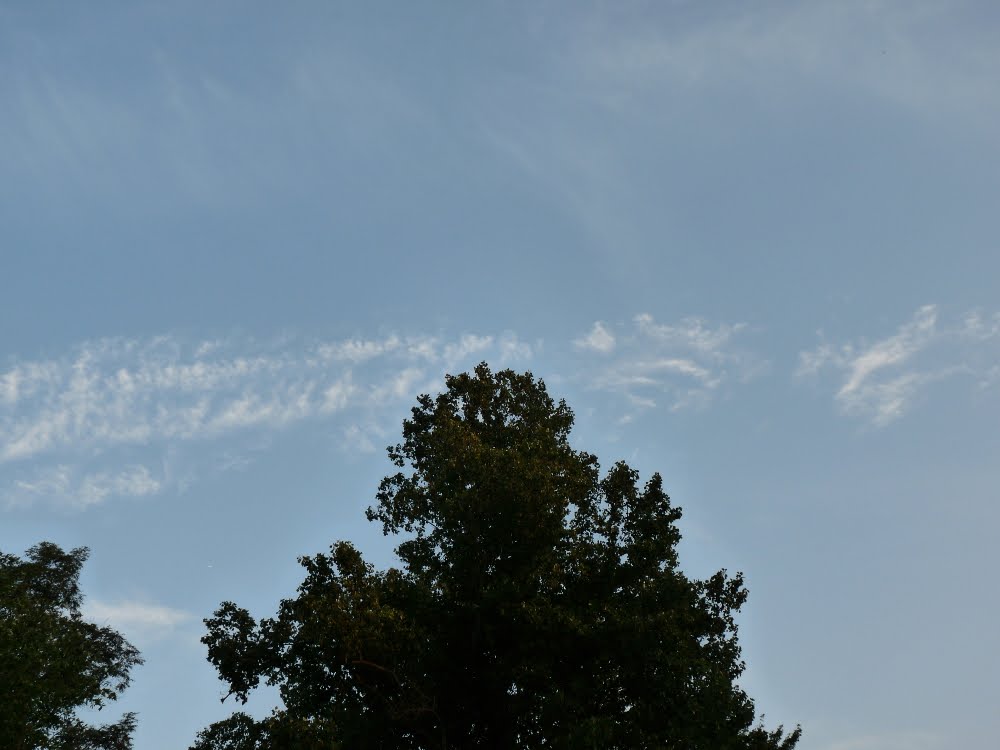
I have not posted on Earl because, well, any discussion on a tropical cyclone can easily get out of hand and out of date. It is not particularly suited to the blog format. Suffice it to say we were spared a big hit once again in New England, and it seems on nearly the entire east coast. I took these photos of hurricane Earl on Thursday evening around 7PM from Stratford!


That is less than exciting, huh? Well, I was not lying - it is Earl. Those are cirrus clouds from Earl's outflow, the air flowing out from the storms embedded in the hurricane. No one would ever know they were the first "signs" of a hurricane if they looked at those pictures without being told. It is not exactly a flashing billboard. Thankfully, none of us needs that billboard, as the effects should be minimal and at worst comparable to the routine storm system we had early last week. We will see if it is strong enough to bring in rare birds from the sea or the south. Can Stratford Point score another big name species?
Photo 1 © Paul Fusco; photos 2-3 © Scott Vincent; photos 4-5 © Scott Kruitbosch


Thanks to Paul Fusco and Scott Vincent for those pictures. The past week was very tough, with record-setting hot and humid weather yet again. It was not a conducive week to depart on a long journey. When you consider the fact the White-tailed Kite will be leaving in a general direction, not knowing where to stop on the way for any source of acceptable habitat for feeding, you have to think it will leave when it is in perfect shape in optimal weather conditions. This will probably include a sunny, clear day that can build thermals (rising warm air that raptors utilize in migration), moderate temperatures, perfect visibility, and a heck of a tail wind from the north. We will have a couple days exactly like this one coming up soon. The next week will feature two cold fronts, the first in the wake of hurricane Earl.
I have not posted on Earl because, well, any discussion on a tropical cyclone can easily get out of hand and out of date. It is not particularly suited to the blog format. Suffice it to say we were spared a big hit once again in New England, and it seems on nearly the entire east coast. I took these photos of hurricane Earl on Thursday evening around 7PM from Stratford!

That is less than exciting, huh? Well, I was not lying - it is Earl. Those are cirrus clouds from Earl's outflow, the air flowing out from the storms embedded in the hurricane. No one would ever know they were the first "signs" of a hurricane if they looked at those pictures without being told. It is not exactly a flashing billboard. Thankfully, none of us needs that billboard, as the effects should be minimal and at worst comparable to the routine storm system we had early last week. We will see if it is strong enough to bring in rare birds from the sea or the south. Can Stratford Point score another big name species?
Photo 1 © Paul Fusco; photos 2-3 © Scott Vincent; photos 4-5 © Scott Kruitbosch
Subscribe to:
Posts (Atom)